

Core Product Definition & Application Scenarios
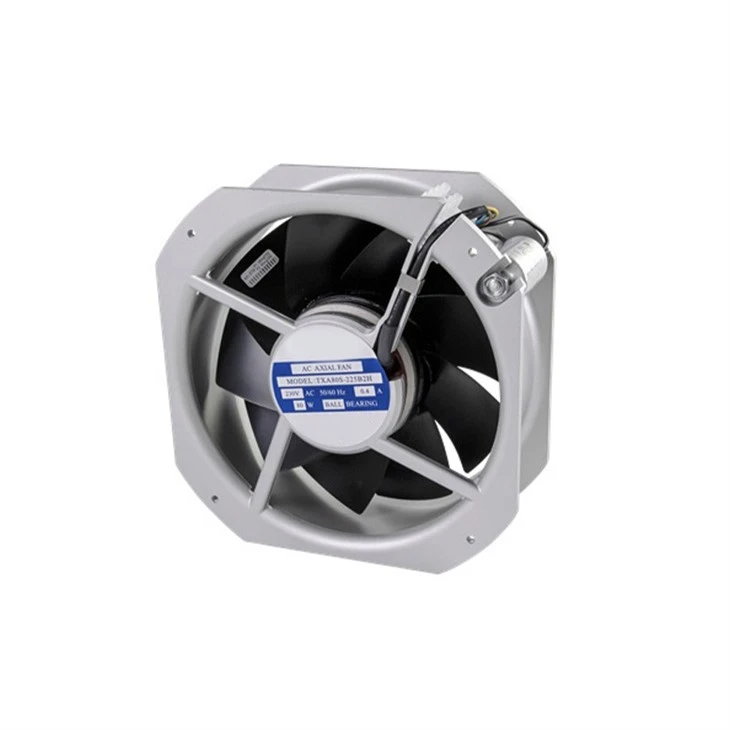
Stable electrical cabinet operation is fundamental to ensuring production continuity. Our Electrical Cabinet Ventilation Fans are specifically engineered to combat high-temperature challenges. They provide efficient, directed ventilation to rapidly expel heat from the cabinet, maintaining temperature within a safe, wide operating range. Whether you operate in metallurgy, power generation, chemical processing, or automation-facing demanding environments with space constraints, dusty or humid conditions, or the need for high-airflow cooling-we can provide a reliable thermal management solution. These fans effectively adapt to high-power equipment and continuous operation requirements, supporting customized scenarios such as explosion-proof or corrosion-resistant applications. This helps you significantly reduce failure risks, extend equipment life, and ensure sustained, stable production.

Core Product Advantages
Because both effective heat dissipation and energy savings are equally vital for equipment operation, we utilize aerodynamically optimized blades and high-efficiency motors to achieve significantly improved airflow. This rapidly removes heat from core components like IGBTs, effectively preventing failures caused by overheating and ensuring your equipment runs reliably. Simultaneously, our products meet the IE3 high-efficiency standard, saving approximately 20% in energy consumption compared to standard fans. Based on an average daily operation of 8 hours, this can reduce your annual electricity costs by over 2,000 kW·h. Selected models feature intelligent PWM speed control, automatically adjusting fan speed based on internal cabinet temperature. This ensures cooling performance while further optimizing energy usage, delivering reliable and economical thermal management.
We understand that reliable protection and durable operation are crucial for you in harsh industrial settings. Therefore, our fans are built with rugged, corrosion-resistant housings and high IP66/IP68 protection ratings. This effectively guards against moisture, dust, salt spray, and even temporary immersion, preventing short-circuit failures and protecting your equipment's safety. Furthermore, our Electrical Cabinet Ventilation Fans utilize long-life double ball bearings and a wide-temperature design. They not only support continuous, uninterrupted operation but also withstand extreme temperatures from -40°C to +60°C, significantly extending service life and reducing maintenance frequency and downtime risk. In the long term, this substantially lowers your operational and maintenance costs while enhancing production continuity.
We fully consider the convenience of your on-site installation and the space limitations within your cabinets. Our Electrical Cabinet Ventilation Fans feature a lightweight design, making them easy to handle and install. They integrate flexibly into your compact cabinet layouts without occupying valuable space for core components. Supporting various mounting methods like wall-mounting and flange installation, coupled with a rotatable junction box, they easily adapt to different installation angles. Additionally, we provide standardized mounting kits for quick compatibility with various cabinet types. This significantly reduces on-site installation and commissioning time, helping you deploy efficiently and lower overall installation costs.
Addressing the dual needs for a comfortable work environment and efficient equipment management: Through meticulously optimized blades and vibration-damping design, we keep operational noise levels at ≤70 dBA. Further noise reduction options are available to help create a quieter, more focused work environment. Concurrently, products integrate FG/RD alarm and temperature sensing functions, providing real-time feedback on fan status. This enables you or your system to perform remote monitoring and receive timely warnings, allowing potential issues to be identified early. This effectively prevents unplanned downtime and significantly improves maintenance response efficiency and production continuity.
Key Differentiators from Competing Products
When selecting a cooling solution for your electrical cabinet, the key is accurately matching actual requirements. Most electrical cabinets have compact internal spaces and relatively straightforward airflow paths, needing to efficiently remove heat rather than overcome high static pressure. Compared to centrifugal fans, which are often bulkier and have higher energy consumption and noise levels, our axial fans are optimized for these precise scenarios. With their high axial airflow volume and low static pressure characteristics, they provide more direct and efficient cooling for your cabinet interior, all while maintaining a compact structure for easy installation. This not only reduces your initial procurement cost but also saves on long-term electricity and maintenance expenses with lower operational noise and energy use, achieving the optimal balance between cooling efficiency and total cost of ownership.
For you, choosing a cooling solution for an electrical cabinet involves balancing performance, cost, and reliability. While liquid cooling offers high heat dissipation capacity, its several-fold higher cost, complex system requirements, and potential leakage risks lead to significant procurement expenses and maintenance burdens. Our axial fan solution meets the cooling needs of the vast majority of electrical cabinets in a more direct, reliable, and economical way. With a simple structure and easy installation and maintenance, it effectively controls temperature while dramatically reducing your initial investment and long-term upkeep costs. It represents a lower-risk, more cost-effective, and robust choice with superior overall value.
Core Selection & Application Guidelines
Voltage & Power Matching: Select single-phase (230V) or three-phase (380V/575V) models based on your cabinet's power supply. Confirm frequency (50Hz/60Hz) compatibility and ensure the motor power rating is appropriate to avoid damage from phase loss or exceeding rated current.
Protection Rating Suitability: Choose IP66 for dusty, humid environments; IP68 for coastal salt spray or temporary immersion scenarios; basic protection models suffice for ordinary dry workshops.
Airflow & Temperature Matching:Calculate required airflow based on cabinet volume and internal component heat dissipation. Ensure the fan's rated airflow meets or exceeds the calculated need to prevent inadequate cooling due to insufficient air volume.
Environmental Adaptation: For low-temperature scenarios (below -40°C), select cold-resistant models with heating elements. Chemical environments may require versions with chemical-resistant coatings. Explosive atmospheres demand models with appropriate explosion-proof certifications.
• Installation Standards:Assemble according to the installation manual by qualified personnel. Ensure correct wiring, and that the fan housing and motor are reliably grounded. Tighten cable gland seals to prevent dust ingress.
• Routine Maintenance:Replenish bearing grease every 1,000 hours of operation. Regularly clean dust and grime from blade surfaces to maintain ventilation efficiency. Always disconnect power before performing any maintenance to avoid electric shock risk.
• Operational Prohibitions: Strictly avoid reverse rotation or phase loss operation to prevent motor burnout. Use dedicated power circuits to ensure stable voltage; avoid using temporary wiring for supply.

Frequently Asked Questions (FAQ)
Q: The noise from our Electrical Cabinet Ventilation Fans has suddenly increased. What could be the cause and how can we fix it?
A: • Primary Causes: Imbalance due to excessive dust buildup on blades, lack of lubrication/wear in bearings, or loose fan mounting.
• Solution: First, power down and clean dust from blade surfaces. Check bearings for dryness and add specialized lubricant. Tighten all mounting screws to ensure the fan is securely fastened to the cabinet. If bearing wear is severe, replace the bearing directly (modular design allows quick replacement without replacing the entire fan unit).
Q: Can these fans be used long-term in corrosive environments (e.g., chemical plants)?
A: Yes. You must select the custom chemical-resistant version. This model utilizes corrosion-resistant alloy housing, anti-corrosion coatings, and sealed construction to withstand acidic/alkaline gases. Coupled with an IP66 or higher rating, it protects the motor from corrosive dust and moisture. We recommend periodic inspection (e.g., every 3 months) of the coating and seal conditions, addressing any damage promptly to extend service life.
Q: How do we determine if a fan's airflow is sufficient for our electrical cabinet's cooling needs?
A: Use one of two methods: First, measure internal cabinet temperature. If the temperature stabilizes within component allowable limits (typically ≤40°C) during operation with no obvious hot spots, airflow is sufficient. Second, perform a theoretical calculation using the formula: Required Airflow (m³/h) = [Total Component Heat Dissipation (W)] / [1.01 x 10³] Temperature Differential (ΔT in °C) Air Density (kg/m³)]. Select a fan with a rated airflow slightly higher than the calculated value for a safety margin.
Q: How is the intelligent speed control function implemented? Does it require additional equipment?
A: No additional equipment is required for basic operation. The fan has an integrated PWM control module and temperature sensor to automatically detect cabinet temperature and adjust speed accordingly (higher temperature = faster speed; lower temperature = reduced speed). It also supports external signal control, allowing integration with PLC systems for manual speed logic setting based on production conditions, adapting to diverse operational needs.
Q: If a fan fails, will it affect the operation of components inside the electrical cabinet?
A:If the fan lacks a fault alarm function. failure will lead to rising internal cabinet temperatures. Prolonged operation under these conditions can accelerate component aging, degrade performance, and potentially cause short-circuit failures. If the fan is equipped with an FG/RD alarm function, it will immediately send a fault signal upon failure, enabling maintenance personnel to act promptly and prevent a continuous temperature rise. For critical production applications, we recommend configuring electrical cabinets with dual-fan redundancy. This ensures the backup fan starts automatically if the primary fails, maintaining continuous equipment operation.
Q: What factors affect the fan's service life, and how can we extend it?
A: Core Influencing Factors:Operating environment (temperature, humidity, corrosiveness), maintenance frequency, and power supply stability.
Methods to Extend Life: Select the correct model for the environment (e.g., wide-temperature models for high heat). Avoid overload operation. Adhere strictly to maintenance schedules for regular cleaning and lubrication. Ensure stable supply voltage, avoiding phase loss or overvoltage. Prevent physical damage to blades from contact with sharp objects. Under normal maintenance conditions, service life can reliably reach 50,000 - 70,000 hours.
Electrical Cabinet Ventilation Fans are not merely simple cooling accessories; they are a core solution for ensuring the stable operation of industrial electrical equipment, reducing maintenance costs, and boosting production efficiency. With their advantages of high airflow, low energy consumption, high reliability, and strong adaptability, they perfectly suit diverse industrial application needs. Compared to centrifugal fans and liquid cooling systems, they offer superior cost-effectiveness and practicality. We not only provide standard products but also offer customized selection guidance, installation support, and maintenance assistance based on your cabinet specifications and operational conditions. From product to service, we provide a complete chain of support to ensure the thermal management security of your electrical cabinets, helping you achieve the dual objectives of production continuity and operational economy.
Hot Tags: electrical cabinet ventilation fans, China electrical cabinet ventilation fans manufacturers, suppliers, factory, axial fan in electrical cabinet, impeller exhaust fan, Electronic Cabinet Cooling Fans, Condensation Control Fan, Electrical Cabinet Ventilation Fans, transformer fans


