



Product Concept
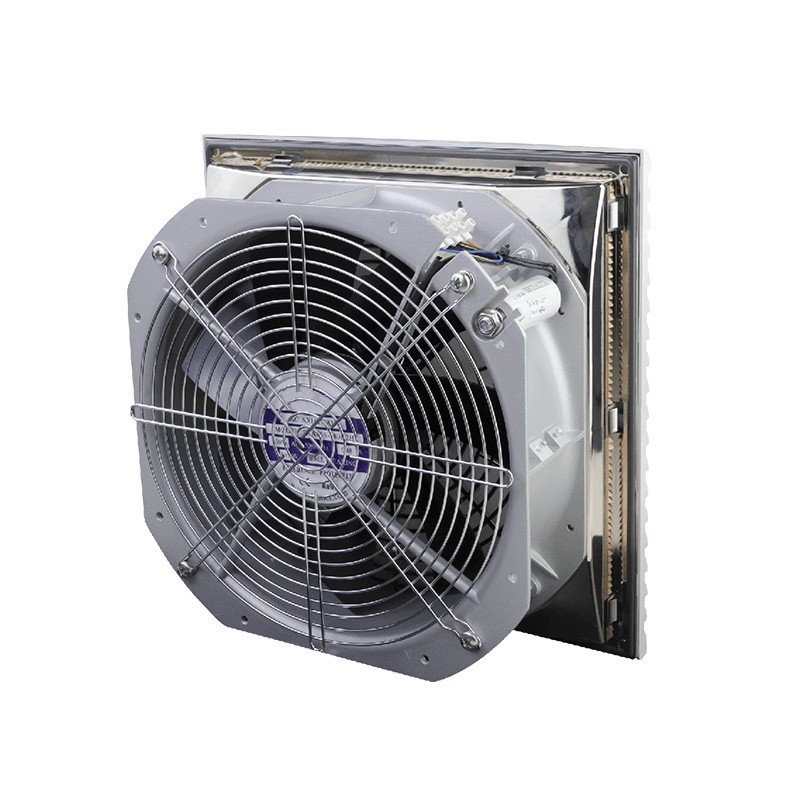
The Condensation Control Fan was designed from a deep understanding of industrial environmental risks. It's not just a reactive device-it's a proactive environmental management system. Its core principle is simple yet powerful: by using high-precision sensors and intelligent algorithms, it intervenes before condensation reaches critical levels, eliminating potential hazards at the source. This means it prevents a cascade of issues such as insulation degradation, short circuits, and corrosion, effectively creating a forward-looking "immune barrier" for your critical electrical equipment.
Core Product Advantages
Dual-Parameter Precision Control: Eliminating Condensation Risks at the Source
Automated protection prevents unexpected downtime and costly failures caused by condensation.
The Condensation Control Fan uses industrial-grade components and anti-interference circuitry. It passes EMC immunity tests and performs reliably under high electromagnetic interference, wide temperature ranges (-25°C to +65°C), and high-humidity dusty environments (≤95% RH non-condensing). The enclosure meets IP65 standards, with some models supporting IP67. Optional 316L stainless steel construction resists corrosive gases in chemical environments. The mean time between failures (MTBF) exceeds 20,000 hours. With AC/DC 85–265V wide voltage input, it easily adapts to complex industrial power conditions without additional power modules, offering excellent installation flexibility.
Our design philosophy emphasizes reliability, flexibility, and intelligence. The Condensation Control Fan allows seamless transition from emergency manual intervention to fully automated operation, ensuring continued control even during sensor faults. The power-loss memory feature restores preset conditions after outages, maintaining uninterrupted protection. Built-in communication interfaces and modular design transform the device from an isolated controller into a connected system, enabling remote monitoring, predictive alerts, and streamlined on-site maintenance. This reduces manual inspections and operational costs while giving centralized, intelligent oversight of environmental risks.
The system is designed to fit your site, not the other way around. Single- and dual-channel versions allow flexible deployment, with dual-channel models monitoring multiple zones in large or complex cabinets. Diverse mounting options let it integrate like a standard component, simplifying installation. Specialized versions for power, rail transit, and data center environments ensure industry compliance and "plug-and-play" integration, minimizing engineering complexity and regulatory risks.
Key Differences Compared to Traditional/Conventional Anti-Condensation Products
| Dimension | Condensation Control Fan (Industrial Smart Condensation Controller) | Traditional Desiccants / Breathable Panels | Conventional Single-Function Controller |
| Protection Logic | Proactively monitors temperature and humidity, predicts condensation risk, and intelligently controls devices; closed-loop protection | Passive moisture absorption, cannot remove formed condensation, limited capacity | Single-threshold control, no predictive functionality, incomplete protection |
| Environmental Adaptability | IP65+ anti-interference+wide temp range, suitable for high-humidity, strong EM, and corrosive environments | Environmentally sensitive, fails quickly in high humidity, no protection | Low protection level (≤IP44), weak anti-interference, prone to failure |
| Operation & Maintenance | Remote monitoring, fault alerts, low maintenance, supports unmanned operation | Requires regular replacement, high labor costs, no remote management | No data logging or remote control, hard to track faults |
| Dimension | Condensation Control Fan Condensation(Industrial smart Controller) | Traditional Desiccants/ Breathable Panels | Conventional Single-Function Controller |
| Industry Compliance | Meets industry-specific standards, supports protocol integration, ensures compliance | No certifications, cannot meet industrial access requirements | Only basic standards, no industry-specific adaptation |
| Longevity | MTBF >20,000 hours, long-term stable operation | Short lifespan (1–3 months), frequent replacement | Components wear quickly, high maintenance, short lifespan |
Core Difference: Traditional products act as passive remedies for condensation, while single-function controllers lack intelligence and compliance. The Condensation Control Fan is a comprehensive anti-condensation solution with predictive control, intelligent regulation, and industry-adapted integration, providing remote monitoring, data traceability, and full environmental risk management aligned with industrial digitalization.
Key Technology Highlights
Uses dew point modeling for dynamic temperature and humidity regulation, preventing errors from single-parameter control and improving protection efficiency by 40% compared to traditional methods.
Supports Modbus, IEC 61850, and other protocols for seamless integration into existing control systems without building a new network.
Dual-channel models include redundancy, sensor fault detection, and load diagnostics, triggering alerts and backup strategies immediately.
Optimized protection levels, mounting methods, and hardware for specific industries, e.g., anti-vibration for rail transit, low-power operation for data centers.
|
|
|


FAQ
Q: 1. Can it be used in 110kV substation switchgear and meet compliance requirements?
A: Absolutely. The power industry version has passed type tests by the China Electric Power Research Institute and meets GB/T 11022-2024 and NB/T 31086 standards. It supports IEC 61850 and integrates with PMS2.0 or D5000 control systems. Dual-channel models monitor top and bottom humidity gradients, complying with national dual-redundancy requirements. It is widely used in Southern and State Grid projects, fully meeting tender compliance.
Q: 2.Will high electromagnetic interference affect monitoring accuracy in workshop environments?
A: No. The Condensation Control Fan uses hardware shielding and software filtering, certified under GB/T 17626 EMC tests. Accurate measurements are maintained near high-voltage cabinets and traction converters, ensuring stable control in complex EM environments.
Q: 3.How do manual and automatic modes switch, and how to quickly dehumidify in emergencies?
A: Manual/automatic switching is simple with a push-button. In emergencies (high humidity, sensor failure), manual mode forces the heater or fan to operate continuously, with an indicator light showing manual intervention. After resolution, switching back to automatic restores intelligent control. Remote emergency dehumidification via the central system is also supported.
Q: 4.Can it link with existing dehumidifiers or heaters without extra modules?
A:Yes. The output supports AC220V 3A resistive loads (NO/NC selectable) and can directly connect to common dehumidification devices. Standardized terminals allow easy installation, and the system adapts to various load types without modifying existing devices, minimizing upgrade costs.
Q: 5.How much maintenance cost can it save compared to traditional desiccants?
A: Operational costs can drop by over 70%:This is mainly reflected in three aspects.
Labor costs: No need for frequent desiccant replacement, saving $150–300 per unit per year.
Failure Costs: Condensation-related faults drop by over 80%, avoiding costly repairs and downtime.
Energy consumption costs: Smart on/off control saves 30–40% in energy compared to continuous heating.
Hot Tags: condensation control fan, China condensation control fan manufacturers, suppliers, factory, axial fan in electrical cabinet, impeller exhaust fan, Electronic Cabinet Cooling Fans, Condensation Control Fan, Electrical Cabinet Ventilation Fans, transformer fans


