

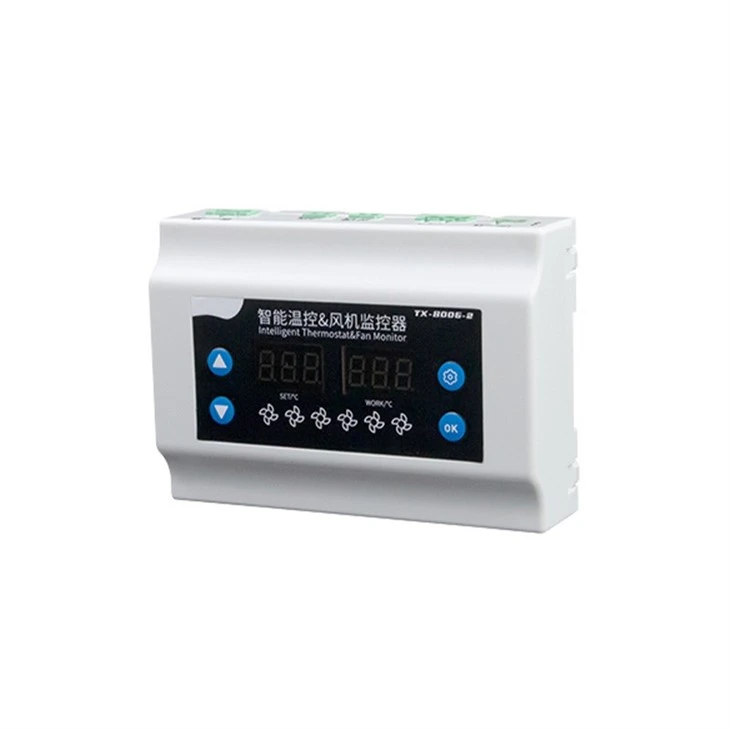
Product Positioning
|
The "Intelligent Control Hub" for Electrical Cabinet Micro-Environments
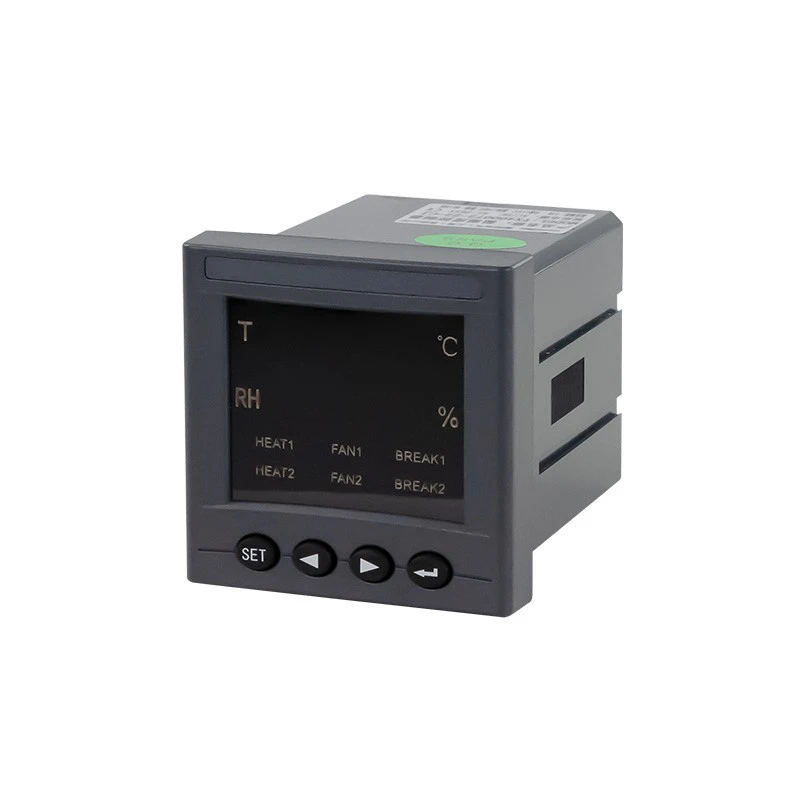
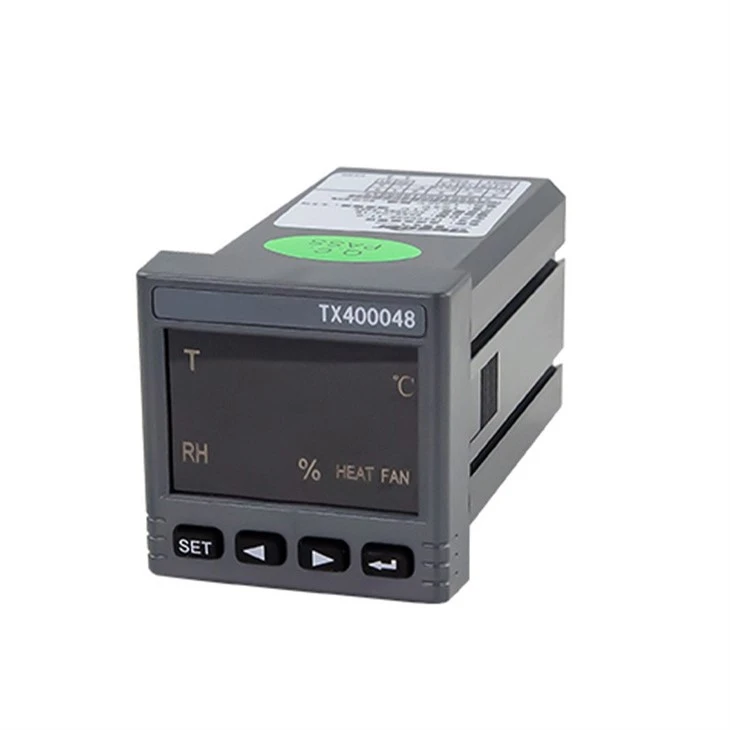
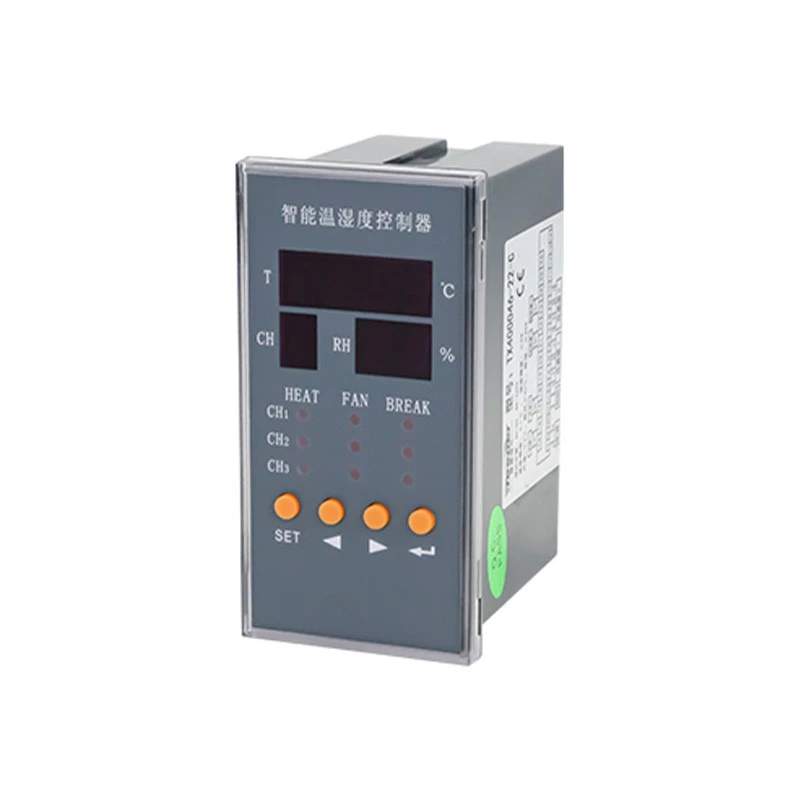
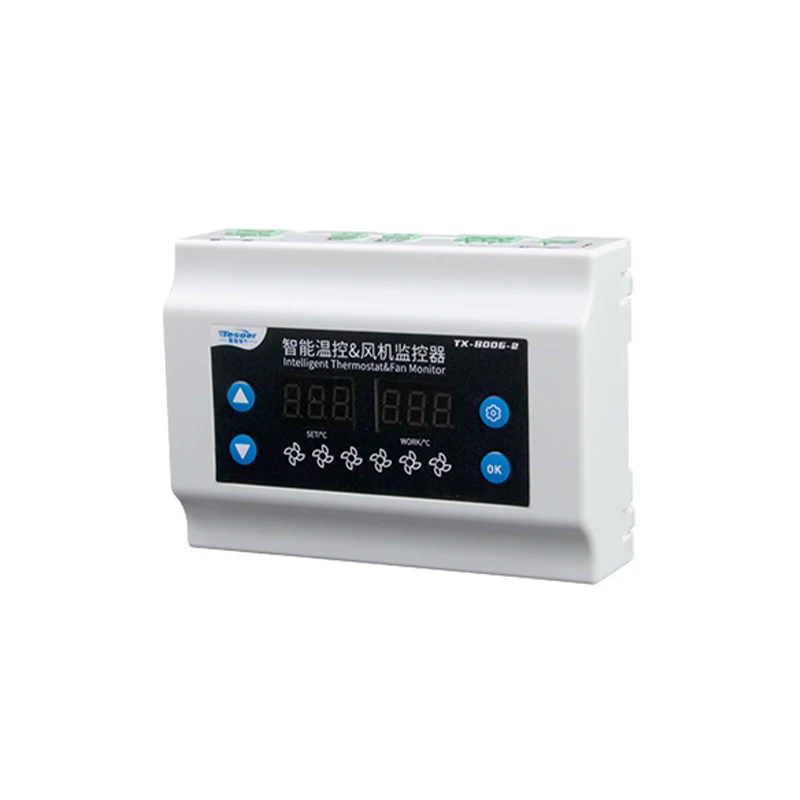
When designing this condenser fan controller, we looked far beyond simple dehumidification. Our goal was to build a proactive, intelligent system for managing the internal environment of electrical cabinets. By continuously monitoring temperature and humidity, the controller automatically determines when ventilation or heating should be activated-intervening precisely before condensation forms.
This closed-loop logic of "sensing → decision-making → execution" fundamentally replaces traditional passive protection methods. The result is a significant reduction in failures and maintenance costs caused by moisture and overheating, while ensuring long-term safety, reliability, and stable operation of critical electrical equipment. |
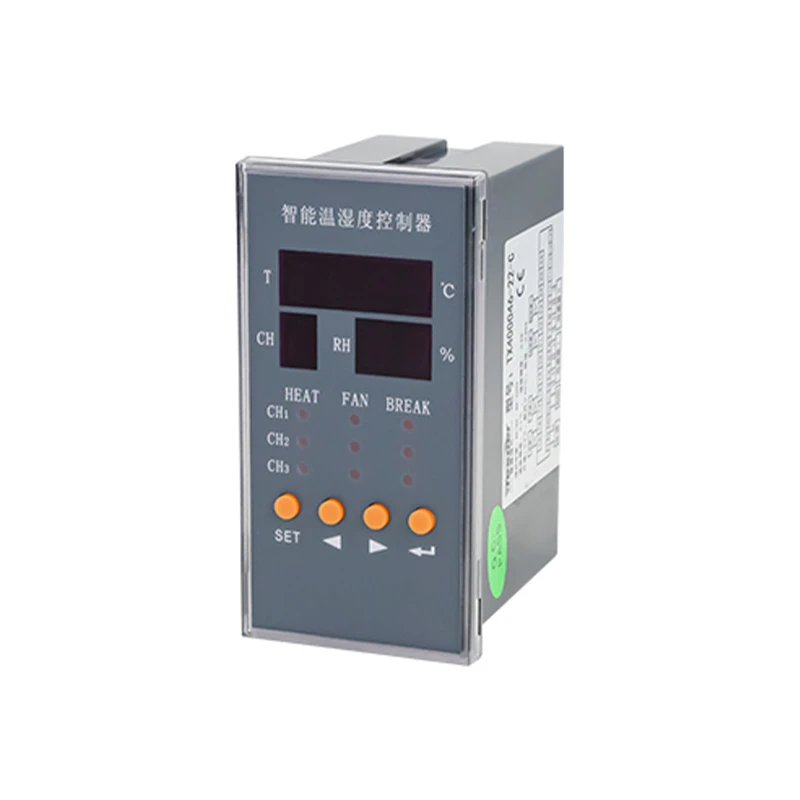 |
Condenser Fan Controller Core Functions & Technical Highlights
At the sensing level, we use carefully calibrated, high-precision imported sensors capable of detecting even the slightest temperature and humidity changes inside the cabinet. This is not about impressive specs on paper-accurate and fast data (±1 °C temperature accuracy, ±3% RH humidity accuracy, response time <10 s) is the foundation for timely and correct control decisions.
Combined with a clear, easy-to-read display, complex environmental data is translated into information that maintenance personnel can instantly understand. This makes preventive intervention straightforward, reliable, and practical.
•Dual-parameter temperature & humidity logic
The control strategy is designed to let the system truly operate autonomously. For example, a typical factory setting starts dehumidification at 85% RH and stops at 75% RH-preventing condensation in advance while avoiding frequent on/off cycling. Temperature control follows the same philosophy, addressing both overheating and low-temperature condensation risks.
These proven factory defaults provide a reliable and energy-efficient automatic solution. More importantly, all thresholds are fully adjustable, allowing the controller to adapt seamlessly to different on-site conditions. Once configured, it runs automatically with minimal intervention.
•Protection against frequent starting and stopping.
Built-in delay logic prevents frequent switching caused by minor environmental fluctuations around threshold values. This is not a simple delay-it's a reliability-driven design choice that reduces unnecessary mechanical and electrical stress on connected devices such as fans and heaters, extending their service life and lowering long-term maintenance and replacement costs.
•Manual override & test modes
True intelligence does not exclude human control. In addition to automatic operation, manual control is retained for emergency situations or special operating conditions. One-button testing and clear "Err" fault indications make system health visible and verifiable, allowing quick checks during routine inspections or rapid fault localization when issues arise-significantly reducing troubleshooting time and maintenance workload.
The Condenser Fan Controller, the controller was engineered around the principles of reliable integration and long-term protection. Wide-voltage input and sufficient relay capacity ensure plug-and-play compatibility across different power supplies and load conditions.
Durable, weather-resistant materials and enhanced protection design mean the controller performs reliably indoors, outdoors, and in harsh industrial environments. It serves as a robust safeguard for electrical equipment, minimizing risks caused by environmental stress or component aging and reducing the need for frequent replacements.
Installation and communication features are designed to be simple, dependable, and forward-looking. Dual mounting options allow flexible installation in various cabinet structures, reducing installation time and retrofit costs.
Power-off parameter memory ensures all settings are retained after unexpected outages, allowing the system to resume operation automatically without reconfiguration. Optional RS485 communication further elevates maintenance efficiency by enabling integration into centralized monitoring systems for remote supervision and batch management-supporting the transition toward unmanned or smart factory operations.
Key Product Advantages
Unlike traditional single-function heating or ventilation solutions, this Condenser Fan Controller uses coordinated temperature and humidity control to eliminate condensation and overheating at the source. It helps prevent insulation degradation, contact oxidation, and corrosion-reducing cabinet downtime by over 60% and significantly extending the lifespan of breakers, relays, and other critical components.
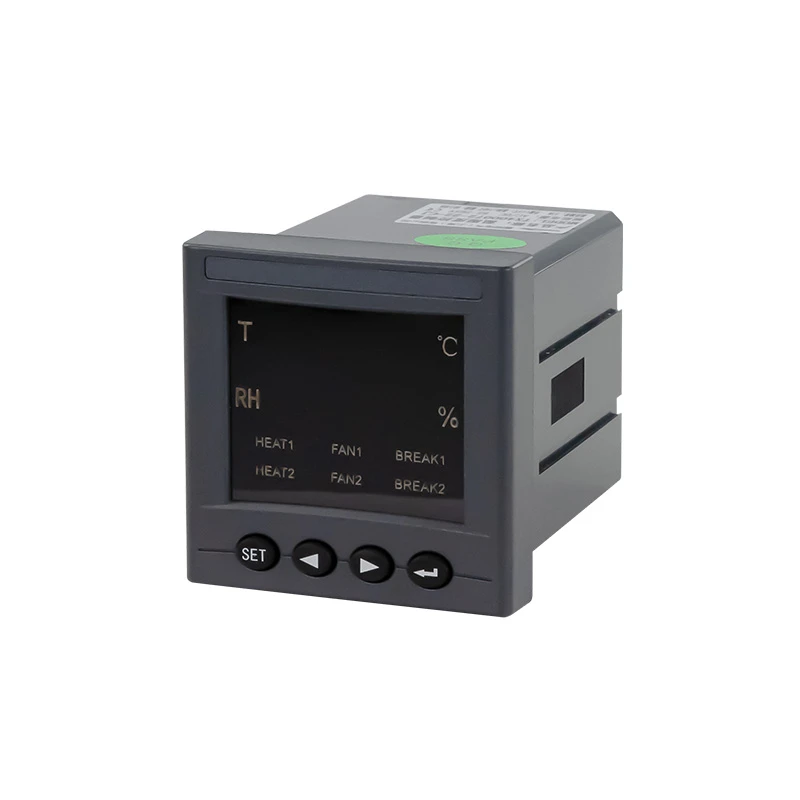
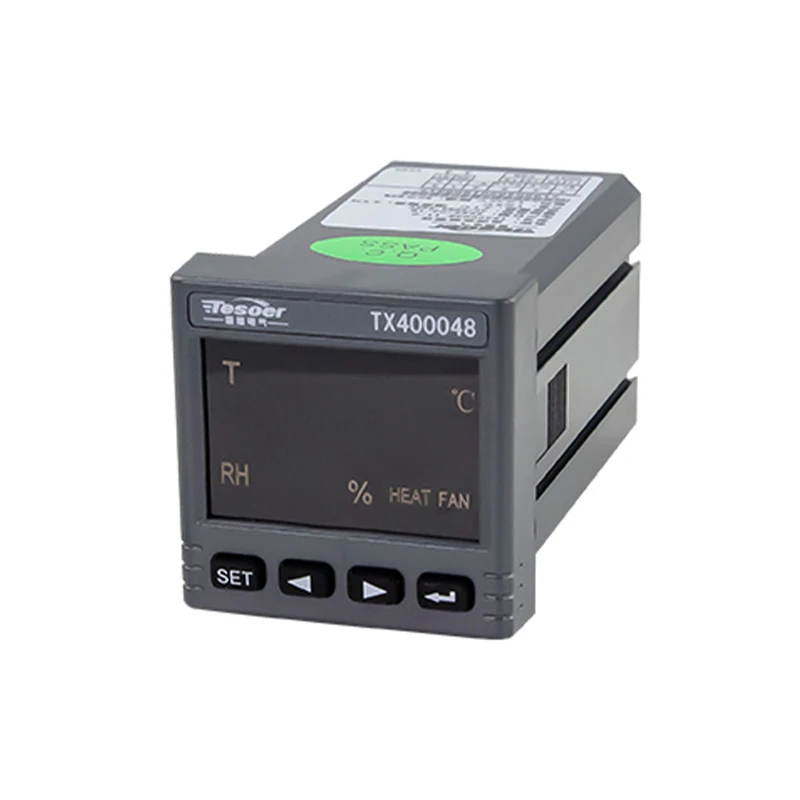
Wide-voltage input, adjustable thresholds, and multiple mounting options make the controller suitable for high-voltage switchgear, PLC control cabinets, EV charging stations, and railway terminal boxes. Whether installed in indoor plants, outdoor substations, or hot and humid tunnels, optimal performance can be achieved through simple parameter adjustments-no need for separate models.
Fully automatic operation reduces manual inspection frequency, while self-diagnostics and alarms shorten troubleshooting time and cut labor costs. Smart start/stop logic avoids unnecessary operation, with total power consumption ≤ 3 W. When paired with fans and heaters, it delivers over 30% energy savings compared to continuous-operation systems-resulting in substantial long-term energy cost reductions.
All core components use industrial-grade packaging and pass rigorous high/low-temperature and anti-interference testing. With an MTBF exceeding 100,000 hours and excellent insulation performance between enclosure and terminals, the controller resists strong electromagnetic interference and avoids false triggering-meeting strict industrial reliability and safety requirements.
Differentiation from Comparable Products
Traditional analog controllers suffer from low accuracy (±5 °C / ±5% RH) and unclear readings, often controlling only temperature or humidity. This product uses digital sensing and intelligent algorithms for higher accuracy, coordinated control, fault alarms, and parameter memory-eliminating common issues of imprecise control and difficult troubleshooting.
Many standard digital controllers lack communication interfaces and have narrow voltage compatibility. This controller is optimized for industrial environments, with wide-voltage support and optional communication for integration into existing monitoring systems-enabling an upgrade from isolated control points to centralized environmental management.
Air conditioners rely on cooling for dehumidification, fail below 18 °C, consume 3–5× more energy, and are impractical for compact cabinets. Standalone heaters only reduce relative humidity without removing moisture, often causing rebound condensation and accelerated insulation aging. This controller combines ventilation + heating for full-temperature-range operation, lower energy use, and stable long-term cabinet environments
FAQ
Q: How do I select the right model for different cabinet sizes?
A: For standard 1–2 m³ cabinets, the standard model (relay rating AC 220 V / 5 A) is sufficient. For large cabinets (> 5 m³), multiple controllers can be used in parallel or a higher-output model paired with high-airflow fans. Compact DIN-rail models are recommended for outdoor terminal boxes or small enclosures. Provide cabinet dimensions and operating conditions for tailored recommendations.
Q: How are fans and heaters wired? Is professional installation required?
A: Clear wiring diagrams are provided. Two dry-contact outputs independently control the fan and heater. Basic electrical knowledge is sufficient-no specialized installation team required. Wiring videos and technical support are available; on-site commissioning can be arranged for large projects.
Q: How does the controller perform in dusty or outdoor environments?
A: The enclosure is designed for industrial protection. Sensors can be externally mounted with proper sealing. When used with IP65 filtered fans, effective dust and rain protection is achieved. For outdoor use, installing the controller inside the cabinet and away from direct water spray is recommended.
Q: How is remote monitoring and batch management implemented?
A: RS485-equipped models connect directly to existing PLC or DCS systems via Modbus-RTU-no extra modules required. Users can remotely view temperature, humidity, operating status, alarms, and adjust parameters in batches. Basic models are available for local-only control.
Q: How should alarm codes be handled?
A: Built-in self-diagnostics display "Err" for sensor disconnection-check wiring or replace the sensor. Heater alarms indicate wiring faults or overloads. A troubleshooting manual is included, and remote or on-site support is available for complex issues.
Q: What is the warranty and maintenance cost?
A: Standard warranty is 18 months, with core components covered for 2 years. Non-human-caused failures are repaired or replaced free of charge during the warranty period. Routine maintenance only requires semiannual terminal checks and sensor cleaning-no consumables, minimal long-term cost.
Hot Tags: condenser fan controller, China condenser fan controller manufacturers, suppliers, factory, thermostat controlled vent fan, dehumidifier machine industrial, Condenser Fan Controller, smartdry dehumidifier, temp control fan, vent with thermostat


